


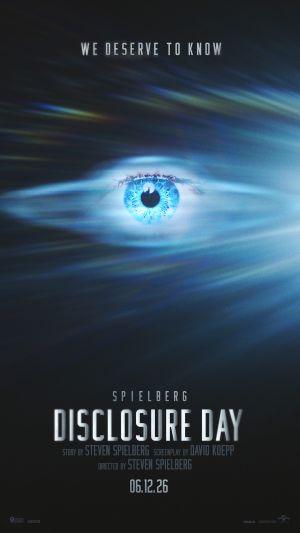

[Rating: Minor Rock Fist Down]
In Theaters Friday, June 9
“Boy, Curt, this is the thing all sports fans in all areas hate to see. A great one playing his last years having this kind of trouble standing up and falling down.” –Monte Moore, October 14, 1973
On October 14, 1973, the Oakland A’s played the New York Mets in Game 2 of the World Series. 42-year-old Willie Mays, famous even today for his other-worldly fielding prowess, chased down a fly ball to center in the 9th inning and did the unthinkable: he tripped, fell, and missed the catch. Mays and the Mets would go on to lose the game and the World Series, yet for those watching the nationally televised broadcast, the stumble of a once-in-a-generation talent in the twilight of his career attached itself to the enduring legacy of not just a season or series, but a career.
Steven Spielberg is one of the greats; he’s on Hollywood’s Mt. Rushmore with first ballot hall of fame credentials and the respect of peers, audiences, and critics alike. And while his 21st century output has met with varying levels of enthusiasm, critical paise, and box office success, no one could have ever doubted his ability to deliver on a cinematic assignment…until now. A top-to-bottom failure in ways that just don’t seem possible for the man who gave the world Jaws, Raiders of the Lost Ark, Schindler’s List, Jurassic Park, and Munich, Disclosure Day is a downright baffling experience, akin to watching a guy who used to snag impossible over-the-shoulder pop-ups trip and fall on a routine fly.
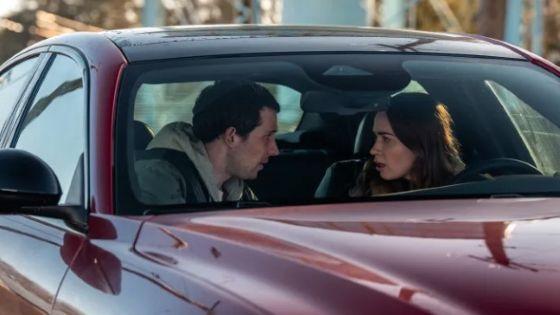
The film starts in media res as a shadowy government organization corners defector Daniel Kellner (Josh O’Connor) at a wrestling match, where he’s agreed to turn over stolen government files in exchange for the release of his girlfriend, Jane (Eve Hewson). The feds follow the orders of department head Dr. Scanlon (Colin Firth) during the exchange, yet Kellner and Jane manage to escape in the first of several deus-ex-MacGuffin moments that serve as the backbone of the narrative. Fellow defector Hugo Wakefield (Colman Domingo) guides Kellner and Jane towards a pre-arranged meet-up via a series of handlers and safe houses that keep them one step ahead of Scanlon and team, yet the baddies are never far behind.
At the same time, Kansas City TV meteorologist Margaret Fairchild (Emily Blunt) goes on the air with a weather report that devolves into an unintelligible series of clicks and grunts before she passes out, waking later to discover she’s gained some new “abilities.” As the paths of Kellner, Jane, Scanlon, Hugo, and Margaret converge, the audience gets only pieces of the larger story, which begin to form an outline of a government conspiracy to hide a startling truth from the world. Why Scanlon is fighting to keep everything quiet, and how Kellner, Hugo, and Margaret factor into that broader truth only becomes clear in the film’s closing moments, building to a tense crescendo that lands with a startling thud.
But how could that be? Where does it all go wrong?
The script by Spielberg and longtime collaborator David Koepp is the chief culprit, as it puts the characters in danger before the audience has any idea of the stakes, or why they should care that all of this is happening to these strangers. Worse still, the good work that goes into setting up interesting scenarios (heroes are captured, heroes are surrounded, the bad guy figures out where heroes are hiding, etc) is resolved by a McGuffin device (or sudden onset superpowers) that are never fully established or explained. The result is a story where every crisis is resolved by what is essentially a magic wand and/or wizard.
But it is a Spielberg movie, it has to at least look good, right?
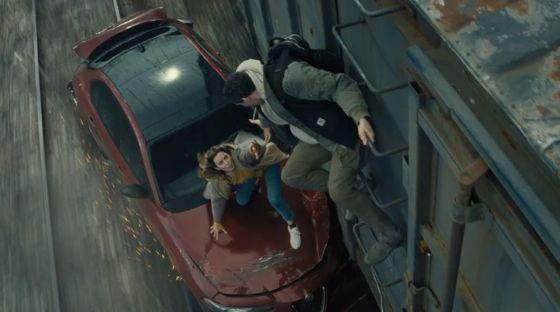
No, it looks dreadful. The cartoonish CGI for the animal renderings feels twenty years out of date, yet it doesn’t disappoint anywhere near as much as some of the action set pieces: one involving a train in particular. Any sense of the kinetic or tactile is lost in an ocean of bad composite work that just FEELS like actors on a green screen soundstage balancing on a hydraulic gimble arm. And if this had been a phase 9 entry into Marvel’s canon, or a Netflix-produced thriller starring Ryan Reynolds, it wouldn’t register as any great cinematic offense…but those efforts wouldn’t be directed by the same guy who staged Indy’s Nazi truck fight in Raiders, the bicycle chase in E.T., or the goddamned assault on Omaha Beach.
Audiences know what it looks and feels like when the greatest of all time is calling the shots and at his best…and this ain’t it. And if this wasn’t bad enough, the moments when Disclosure Day stops to develop the humanity of its characters falls even flatter, bloating an already sluggish 144-minute runtime with scenes that betray Spielberg’s gift for the visual language of humanity. A mixture of too-earnest acting and a script that doesn’t give the audience any opportunity to know these characters outside of the immediate events of the story hamstring these efforts further still, and force a viewer to play catch-up right up to the final frame.
And it’s not like Spielberg and Disclosure Day are giving less than 100%, here, incorporating well-timed themes related to community, compassion, spirituality, and authoritarian overreach. Perhaps it is the moment the movie finds itself arriving, scrubbed raw as it is of anything resembling hope or faith in one’s fellow man/woman, but very little of it resonates in any meaningful way, and is hampered by a cast that is trying SO HARD to sell all of this that it comes off as forced and artificial.
Even so, kudos to Spielberg for giving his unironic best with a big swing on original I.P. that has its heart in the right place, and a few interesting (albeit played out, X-Files-adjacent) ideas. A slog to get through at almost two and a half hours, one can at least find some comfort in a long and generous catalogue that does many of the same things featured in Disclosure Day, but much better elsewhere. And while it’s nice to see Spielberg out there, still roaming Hollywood’s outfield as a reminder of the best the industry has to offer, one can’t help but feel a little embarrassment at the sight of a legend stumbling to snag a pop-up that was once so routine.

“Obvious Child” is the debut novel of Warren Cantrell, a film and music critic based out of Seattle, Washington. Mr. Cantrell has covered the Sundance and Seattle International Film Festivals, and provides regular dispatches for Scene-Stealers and The Playlist. Warren holds a B.A. and M.A. in History, and his hobbies include bourbon drinking, novel writing, and full-contact kickboxing.

Comments on this entry are closed.