



[Rating: Minor Rock Fist Up]
In Theaters Friday, October 30
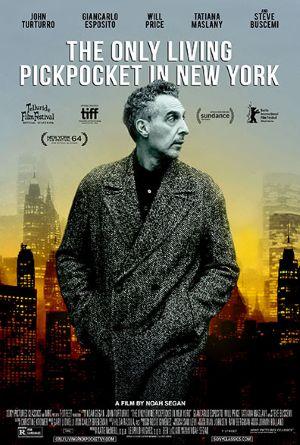
An earnest love letter to a vibe and city that’s got more love to it than letter, The Only Living Pickpocket in New York (OLPNY) is an okay movie made good by way of a career-best performance. Writer/director Noah Segan deploys several characters throughout the story, yet it is New York City itself that goes toe-to-toe with John Turturro as the focal point of the narrative, and serves as the spiritual backbone of the picture.
Harry (Turturro) is a New York City pickpocket whose best years are behind him in more ways than one. Struggling to make ends meet with marks who carry no cash and have tracking devices on their electronics, Harry laments to his pawnshop owner friend/fence, Ben (Steve Buscemi), that the city just isn’t the same. Even the NYPD detective (Giancarlo Esposito) that keeps tabs on Harry seems more amused than threatened by the guy, and treats Harry like some kind of discarded souvenir from a bygone era.
Things change when Harry lifts the wallet of a guy, Dylan (Will Price), that happens to be connected to a powerful criminal syndicate. Dylan manages to track Harry to the apartment he shares with his catatonic partner, Rosie (Karina Arroyave), and threatens both with serious consequences if a USB drive from Dylan’s stolen wallet isn’t returned. This kicks off a race against the clock for Harry to deploy the same skills that got him into trouble out of it again, which calls for every trick he’s got up his sleeve.
Segan’s use of the city and the jazzy score afford it a very particular flavor that aligns thematically with the material. Like Harry, the music, characters, and dilemmas in OLPNY are something from a specific, forgotten era operating within an environment that has long since moved on. Sure, Manhattan is still a buzzing hive of activity full of endless possibilities and immeasurable wealth, but this isn’t the wide-open cityscape of Dog Day Afternoon or The Taking of Pelham One Two Three.
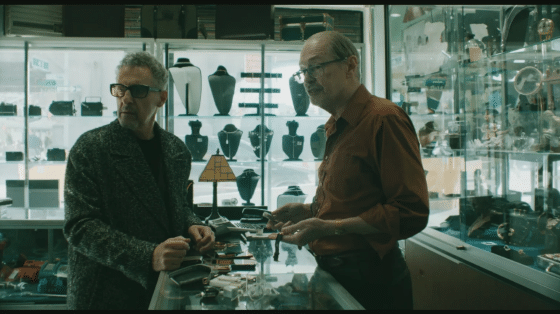
No…now there’s guardrails on the city and its surface-level loot, and all the most successful crooks carry briefcases. Turturro is going to be 70 in a few months, and except for the moments when Harry is “working,” his performance shows a man carrying every one of those years in his bearing and posture. Being a pickpocket for a living isn’t a casual profession, and Turturro sells both the grace of the actions and the fatigue of the lifestyle in equal measure.
Buscemi, Esposito, and Arroyave lend credibility to the setting and this little pocket of the story’s world, yet the script and Price don’t establish all that much menace for Dylan and what he represents. To Segan’s credit, there’s never a line of clumsy dialogue that spells out what’s going to happen if Harry can’t recover the USB, but in the quest to show instead of tell, there is little to see, here. It is a problem that hampers the second and third acts of OLPNY, where the stakes are clear enough, yet the capabilities of the villain are anything but.
For a movie that revels in the rich history of its setting and Harry as a living piece of it, the script also doesn’t take a lot of time to explore how a lifetime of contacts and connections in one of the biggest cities in the world could factor into some kind of resolution to all of this. Although Harry does call on some of these connections for assistance, there is a narrow narrative focus to the story that hems things in and keeps the film from realizing its full potential.
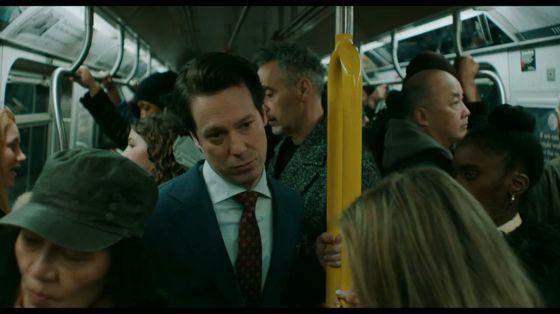
And as far as potential goes, there’s plenty to be found in OLPNY, and that begins and ends with Turturro giving a performance that rivals anything he has ever done. For an actor with a resume as deep as Turturro’s, this is no casual claim, and it’s one that’s certain to be made in the coming months as awards season kicks off in earnest. The way he wears Harry’s weariness and physical disintegration throughout the film carries more weight than any of his dialogue and does go part of the way towards explaining why the character might not be looking for a way out of this mess for himself.
At about 85 minutes, there is plenty of room for this kind of exploration in OLPNY, but Segan and the script make the decision to keep things on a single rail headed straight for the finish line. This economy of action and narrative are effective at keeping the pacing brisk and the tone urgent, even if both are undercut somewhat by a weak villain and fuzzy stakes. Still, if there’s one aspect of the production not at all in doubt, it is the use of setting to establish a genuine sense of place for the story and these characters.
This isn’t a movie that operates around the fringes of Times Square or Central Park, after all: it revels in the forgotten corners of the outer boroughs, the chipped and scarred corners of Roosevelt Ave or Park Slope. As a film it is decent, but as a vehicle for the full range of John Turturro’s acting talents, it is a generational showcase of a master at the top of their game. Like Harry, OLPNY is liable to sneak up on a viewer and surprise them when they are not looking, though how they feel about it after the scam is revealed is anyone’s guess.

“Obvious Child” is the debut novel of Warren Cantrell, a film and music critic based out of Seattle, Washington. Mr. Cantrell has covered the Sundance and Seattle International Film Festivals, and provides regular dispatches for Scene-Stealers and The Playlist. Warren holds a B.A. and M.A. in History, and his hobbies include bourbon drinking, novel writing, and full-contact kickboxing.

You must log in to post a comment.