



[Rating: Swiss Fist]
In Theaters Friday, May 1
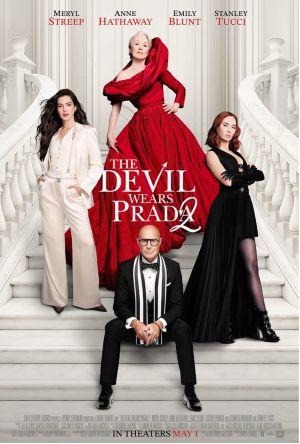
Most legacy sequels fail because they don’t have a reason to exist outside of nostalgia baiting, but that’s not the case with The Devil Wears Prada 2. Indeed, this long-awaited follow up to the 2006 classic finds itself landing in a narratively interesting moment for its characters and their publishing universe, and still it stumbles due to a raft of new characters no one asked for and an overreliance on deus ex machina billionaires. A sometimes pleasant return to an entertaining world, sure, yet the problems in the script make this a hard sell for any audience: returning or otherwise.
Twenty years after the events of the first movie, Andy (Anne Hathaway) and Miranda (Meryl Streep) are both experiencing separate, professional catastrophes. Miranda and her ‘Runway’ magazine recently ran a puff piece on a company caught up in a sweatshop scandal, and on the other side of New York City, Andy and her whole cohort of hard-hitting journalist colleagues learn that their publication is folding. Runway’s chairman, Irv (Tibor Feldman), and his son/successor (B.J. Novak), settle on the idea of hiring Andy as a way to improve the magazine’s optics by inviting a respected journalist back into the company’s fold.
Besides Miranda, Andy’s return to Runway also brings her back into the orbit of Nigel (Stanley Tucci), the magazine’s compassionate yet pragmatic fashion director, as well as Emily (Emily Blunt), who now works for Dior. And while some things have remained the same, Andy must again adjust on the fly to a whole new world at Runway, which is suffering from the death of print media and journalism just like every other once-powerful publication. Andy isn’t the wilting flower struggling to find her strength and voice like in the first movie, yet her hard-hitting articles and resilient attitude don’t aid her all that much early on.
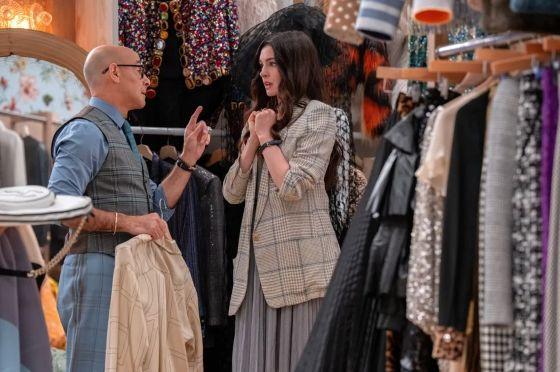
The script has some interesting ideas, and it tees several of them up right from the jump, including a discussion about the slow demise of journalism, corporate enshittification, and the new and increasingly common American pastime of a midlife professional reset. All of these developments feel like an organic extension of the story two decades on, and the script is braver than most 21st century reboots for allowing these characters to grow and mature in a realistic manner. Even so, there’s a lack of focus to the narrative that gives the already robust two-hour runtime an even more bloated impression.
The call-backs to famous lines (“a million girls would kill for this job”) and moments (cafeteria chowder, near-identical belts, upstairs invasions) aren’t the issue so much as the narrative echoes, which cram star-crossed romance and corporate espionage back into this story as if by contractual obligation. Both elements worked to varying degrees in the original, but in the sequel, they break the momentum of a shockingly interesting character study about aging and the ways the world leaves its dreamers behind.
When The Devil Wears Prada 2 sticks to the OG cast to catch up on the changes that twenty years have wrought, things click and the audience falls right back into this world: it’s the new characters and old story beats that slow this one down. With the exception of Simone Ashley as Miranda’s assistant, Amari, few of the new players in this story feel like a piece of the universe audiences fell in love with back in 2006. Gen-Z boomer-humor generators Caleb Hearon and Helen J. Shen suffer the most on this front, though Kenneth Branagh and Patrick Brammall don’t fare much better as the lab-grown, conflict-free men of this story.
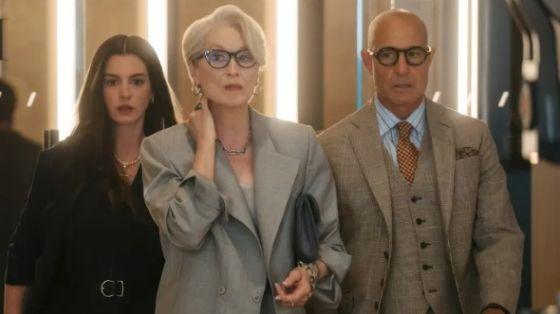
Andy and the movie are well into the second act without a romantic interest in sight, correcting one of the few stumbles in the original installment’s screenplay…only to then add an unnecessary B-plot about Andy falling for an architect (Brammall). The script forgets about the relationship for long stretches, though, and unlike Novak’s character, the character has no real impact on the larger story. Larry Mitchell also suffers a similar fate as Mack, Andy’s journalist colleague, who is a big part of her motivation to return to Runway early on, but then just kind of fades out of the story.
Maybe the biggest hurdle the sequel stumbles over is one of wealth and class, which hangs over the head of this thing like the pillow of Damocles. Every serious problem Andy, Miranda, and the movie experience is resolved by the generosity of literal billionaires, which puts this movie very much out of reach for most viewers. Whereas the original 2006 film followed a spunky, near-broke post-grad using her wit, ingenuity, determination, and resolve to navigate a scary new world, the sequel puts everyone in spacious Manhattan townhomes and condos, emphasizing the power of connections over everything else (including good journalism).
At a time when Americans are experiencing the biggest wealth disparity in our history, the almost Gatsby-level wealth-coding in The Devil Wears Prada 2 feels like a slap to the face. And while several interesting ideas and timely cultural touchstones buttress the larger story, a laborious runtime padded out by too many new, underutilized individuals makes for an uneven, sometimes uncomfortable watch. Blunt, Hathaway, Tucci, and Streep are all having a blast reveling in their now-iconic roles, and fans of the original have plenty to be happy for in this regard: hell, the story is even decent! Even so, the aftertaste of the film is a bitter one, and like the difference between navy and cerulean, the distance between part 1 and 2 is somehow both a crack and a chasm.

“Obvious Child” is the debut novel of Warren Cantrell, a film and music critic based out of Seattle, Washington. Mr. Cantrell has covered the Sundance and Seattle International Film Festivals, and provides regular dispatches for Scene-Stealers and The Playlist. Warren holds a B.A. and M.A. in History, and his hobbies include bourbon drinking, novel writing, and full-contact kickboxing.

Comments on this entry are closed.