


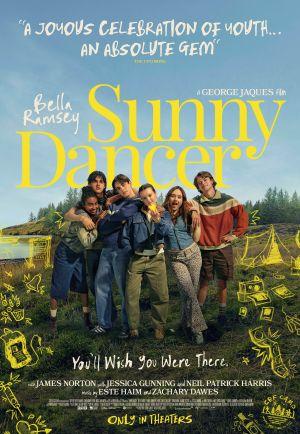

[Rating: Solid Rock Fist Up]
In Theaters Friday, September 18
Relentlessly charming movies with rich, developed characters and genuine emotional clout are a rare thing, so it can be easy to overreact to them when one comes along. It’s almost cheating when that same film also deploys kids with cancer and a career-best performance from Neil Patrick Harris as resources in its assault on the audience’s heartstrings, which…well…it just isn’t fair. Yet when something hits as hard as Sunny Dancer does, and accomplishes the emotional coup it manages in its final act, one just has to kind of surrender and go along for the tear-soaked ride.
Ivy (Bella Ramsey), daughter to Bob (James Norton) and Karen (Jessica Gunning), is eighteen years old and ten months into her leukemia’s remission when her parents approach her about going to a summer camp, CRF, in Scotland. CRF is a safe space for survivors like Ivy, and strives to give them the social interaction and bonding experiences many have missed out on due to their extended treatments. Jaded and crabby beyond her years, Ivy is reluctant to attend and only relents when her thoughtful parents encourage her to open up and give it a shot, if only for their sake.
CRF president Patrick (Harris) welcomes the campers to the summer program with a barrage of songs and platitudes that set Ivy’s teeth on edge, yet she softens after some bonding with her new roommate, Ella (Ruby Stokes). Ella pulls Ivy into her tight friend group, who are impressed with the latter’s irrepressible cynicism and honesty when both are put on full display with Ivy’s public scolding of a “grief tourist.” The beats of the script come as one might expect from here, with Ivy opening up and fighting against the notion that the world can or will offer anything but more pain and misery, yet writer/director George Jaques has a few tricks up his sleeve and executes on them well.
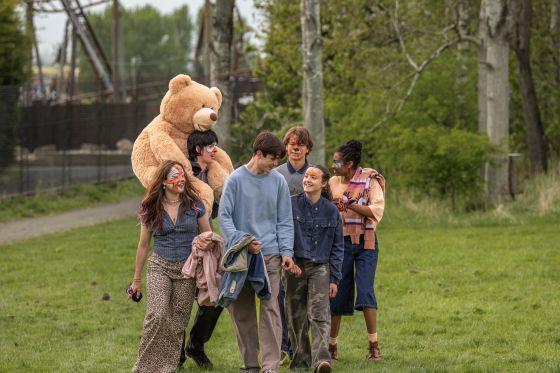
Were this just a rote narrative about a curmudgeon who learns to love again via the power of friendship, Sunny Dancer would collapse halfway through its second act. Jaques and the script eschew these easy layups to instead invest in the nuances of the characters, allowing them room to develop and reveal themselves in an honest way. Patrick initially comes off as a sort of clueless optimist who doesn’t know how to connect to Gen Z kids, but the script affords him time to develop as more than just a prop for the story, and reveals his posture as an act meant to help both him and the campers navigate the complicated emotions of this kind of environment.
In one revealing moment, Patrick tells Ivy, “When you say ‘sorry’ as a kid, it makes the problem just go away. It’s like a magic word. But as you get older, it doesn’t quite have the same power.” Even Brenda (Josie Walker), the no-nonsense nurse who manages the medications for the campers, enjoys layers to her characterization despite just four or five minutes of screen time, becoming more than just a cut-out foil for the leads. Jaques and the script take none of them for granted, and it’s this work that allows the events in the back half of Sunny Dancer to hit as hard as they do.
It’s also a credit to the efficiency of the script that the movie needs just 106 minutes to tell its story, and despite a few quibbles that could be lodged against the broader conceit of the set-up (summer camps aren’t really a thing in the U.K.), there is a genuine flavor to the story and characters that permeates all aspects of the production. It takes the movie all of five minutes to establish the relationship dynamics and history of Ivy’s family, and it’s just as quick with the establishment of Ella’s friend group dynamics. And while Ramsey doesn’t feel like they are stretching themselves all that much from their work in Game of Thrones and Last of Us, Stokes and Harris are at their best, here.
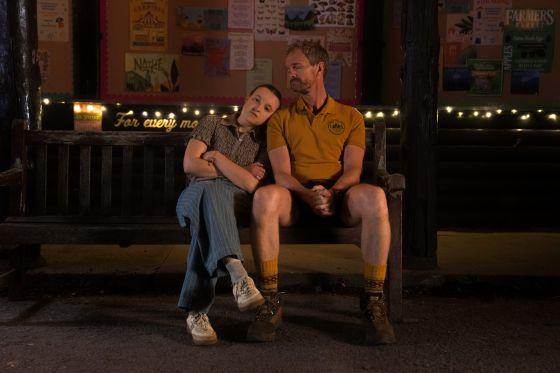
It’s also nice to see a movie about cancer and survivors that doesn’t devolve into misery porn or some sort of referendum on life and its meaning. Sunny Dancer is a coming-of-age story first and foremost, and its greatest strength is its willingness to let the illnesses of these characters serve as components of who they are rather than the basis for it. CRF is the engine of the narrative, sure, but the characters never treat the setting in this way, instead using it as a launching pad to bond with each other and speak honestly about the difficulties of adolescence: just like any person that age might.
Thoughtfully considered, well written, wonderfully acted, and deliberate with its characters at each step, Sunny Dancer achieves the rare cinematic miracle of balancing sentiment against sentimentality. The story of a jaded young woman that goes through all the expected acrobatics of a person learning to open up again in spite of trauma, Jaques and his script reimagine the beats of a tired story through the lens of several dynamic characters. And while it can sometimes feel familiar, much like the medicine Brenda dispenses to the kids at CRF, it goes down easy and is good for you.

“Obvious Child” is the debut novel of Warren Cantrell, a film and music critic based out of Seattle, Washington. Mr. Cantrell has covered the Sundance and Seattle International Film Festivals, and provides regular dispatches for Scene-Stealers and The Playlist. Warren holds a B.A. and M.A. in History, and his hobbies include bourbon drinking, novel writing, and full-contact kickboxing.

You must log in to post a comment.