




[Rating: Solid Rock Fist Up]
In Theaters Friday, February 27
An erotic thriller that sits on a load-bearing pillar at the center of America’s in-progress collapse, Dreams tells a small story on the largest possible canvas. A film about the ways toxic relationships skew power dynamics and corrupt good intentions, it plays with familiar tropes in an altogether unique way that accounts for the moment it finds itself arriving.
Fernando (Isaac Hernández) is a 20-something ballet dancer from Mexico City that’s making his way across the U.S. southern border in the opening minutes of Dreams. This isn’t his first time making the trip, however, as evidenced by his familiarity with his eventual destination, San Francisco, where he uses a spare key to enter the swanky home of 40-something Jennifer McCarthy (Jessica Chastain). Their passionate love making and casual conversation the next morning inform the audience of the important details of their relationship, if not their full history, and the scenes that follow fill in many of the gaps.
Jennifer is a professional philanthropist/rich kid using the levers of institutional power at her disposal to both help Fernando but also keep him close. Ravenous in the bedroom, yet shy when out with Fernando in public, Jennifer treats the relationship the way a rebelling 15-year-old might, reveling in the forbidden undertones underpinning their dynamic without any sense of her partner’s feelings or agency. Bristling at the idea of being a kept man without any say in his short or long-term prospects, Fernando leaves Jennifer to make his own way in the world: a move that shifts the power balance between the two and sets the pair on a dangerous trajectory.
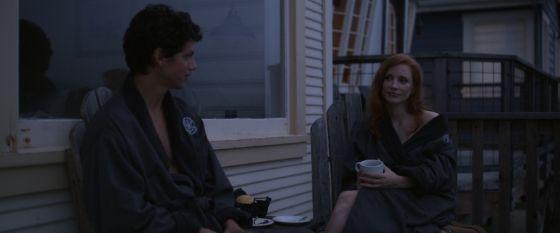
The power of intimacy (consensual or otherwise) and its hold over people is a frequent theme of the films of writer/director Michel Franco, yet he’s never come at it from this direction before. Dreams hinges on the struggle to gain ownership of a relationship’s steering wheel, and the literal and figurative fight Jennifer and Fernando engage in for this. The setting and political climate take this battle to a level beyond the traditional ghosting/stalking/arguing/public outburst cycle, adding a dash of crazy from both parties to elevate the stakes further still.
Fernando’s willingness to risk violent arrest and deportation so that he can be free of Jennifer’s control and “charity” is a true act of courage, even if his privileged ex-girlfriend only views it through the lens of what she has lost. Jennifer’s refusal to learn Spanish, publicly acknowledge their relationship, or even allow Fernando to have any kind of life outside of her direct purview speak to what is actually important for the woman: who views Fernando like a middle-aged guy might a sports car that also injects heroin into the driver. The much younger man is little more than an exciting plaything for Jennifer, and she treats his loss much like a person coming off a new, exciting, addictive drug.
Chastain is riveting and chilling all at once, playing the part of a woman slowly losing control of not just a relationship, but her sense of self. The face of a charitable organization that promotes the arts and the disadvantaged, Jennifer spends almost every waking moment of her personal life trying to regain ownership over a vulnerable, disadvantaged artist. Chastain plays the scenes of Jennifer fending off the concerned queries of her brother (Rupert Friend) and father (Marshall Bell) with measured precision, allowing the audience brief glimpses of her mask’s several slips. The emotional juxtaposition of these moments against the vulnerable, unguarded scenes of intimacy between her and Hernández demonstrate why Chastain has a gold statue at home, and why she should be a part of the early conversation for another with this turn.
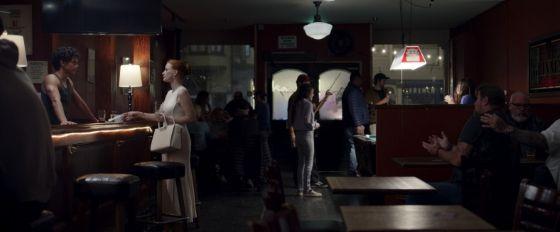
Franco presents the drama with a dispassionate, removed approach, using only diegetic music along with camera placements that often put obstacles in the foreground, encouraging an almost voyeuristic feeling in the viewer. The dark, shadow-filled world of Jennifer stands in stark contrast to the warm, cozy lighting that characterizes Fernando’s environments, demonstrating a deliberate and effective sense of place for these characters and the world they inhabit. These two people are navigating more than just a relationship in Dreams, they’re exploring a brand-new dialectic about love, control, and power in 2026’s America, and Franco understands the delicacy of the visual language required to tell this story.
This is necessary, too, because this isn’t just a familiar retelling of one-sided lust and obsession, it is a treatise on performative allyship and the many faces of exploitation in this moment. Assholes come in many varieties, and while some may be more obvious than others, all of them stink at the end of the day. Jennifer is the kind of person who doesn’t hear the word “no” all that often, and that kind of privileged insulation can lead to all sorts of nasty shit about which Dreams only scrapes the surface. And while Franco and the picture don’t go so far as to condemn the idea of charity or love as concepts, they do encourage the audience to look a little closer at such offerings to make sure there aren’t any strings attached to them.

“Obvious Child” is the debut novel of Warren Cantrell, a film and music critic based out of Seattle, Washington. Mr. Cantrell has covered the Sundance and Seattle International Film Festivals, and provides regular dispatches for Scene-Stealers and The Playlist. Warren holds a B.A. and M.A. in History, and his hobbies include bourbon drinking, novel writing, and full-contact kickboxing.

You must log in to post a comment.