My love affair with Pixar’s latest animated masterpiece “Wall-E” is so absolute that it has inspired this list of my Top 10 Artificial Intelligence Movies, or savvy circuit-board flims. That is to say, more specifically films featuring memorable robots. It is entirely possible that robots and artificial-intelligence storylines have ultimately been best served by the very best of small screen sci-fi, in endless episodes of “Star Trek: The Next Generation” or “Doctor Who,” but over the years there have been some extremely interesting and philosophically profound films that attempt to deal with humanity’s curious destiny to recreate ourselves in the form of wicked smart machinery. So, dig in and as always tell us what you think.
10. Artificial Intelligence: A. I. (2001) 
Movie magicians Steven Spielberg and Stanley Kubrick teamed up just the once, and their undearppreciated effort received a mixed reaction from audiences. I defend the film on the strength of the ideas and themes it so boldly plays with, and not on the terrifying voicework cameo by Robin Williams. I still maintain that the film would be far more compelling if the film had ended with the Haley Joel Osment character entombed, frozen and alone for an eternity at the bottom of the ocean, but, robot or not, Steven Spielberg can’t just abandon a kid and then run the credits. The film’s art direction and visual style are brilliant, and the challenging narrative has all the hallmarks of top-notch philosophical science fiction.
9. Alien (1979) 
One of the more memorable moments - outside of the alien exploding out of John Hurt’s chest - in Ridley Scott’s sci-fi classic “Alien,” is the big reveal that Ian Holm’s character, science officer Ash, is an android. For me, subsequent “Alien” pictures failed to capture the claustrophobic paranoia and creepy thrill of the original. And while only a part of the larger story, the skillfully crafted arc of Holm’s mysterious character proves yet again that he’s a total badass.
8. Robocop (1987) 
Director Paul Verhoeven would go on to commit such celluloid crimes as “Showgirls” and “Hollow Man,” but in 1987 he was busy making a machine-meets-man classic in the original “Robocop” starring “Buckaroo Banzai” himself, Peter Weller. A 2010 remake is in the works, but I for one don’t need a rehash of this gem. I say leave well enough alone, unless of course they can see to it that “That 70’s Show” co-star Kurtwood Smith is the baddie again, at which point I may revise my previous statement.
7. Star Trek: Generations (1994), Star Trek: First Contact (1996) 
While “Generations” was in many ways a superior film, both “Generations” and “First Contact” continue the Data (Brent Spiner) character’s search for self-awareness. The “Next Generation” series had more time to devote to Data’s ongoing adventures, but the films continue to explore the iconic android’s fascinating journey to find emotion and purpose. Sure, “Generations” boasts original cast members, but the thing “First Contact” has going for it is The Borg. Easily one of the Star Trek universe’s most righteous players, The Borg have burned the words “futile” and “assimilation” into the brain of any serious sci-fi fan, making them both educational and frightening.
6. The Matrix (1999) 
The Wachowski brothers went and completely besmirched the legacy of this film with uninspiring sequels, but the concept of an illusory world contained within a planetary wide computer matrix remains one of the modern era’s most undeniably original storylines. The computer brain is personified by Agent Smith, played marvelously by one of modern cinema’s finest support players, Hugo Weaving. Without the sequels, “The Matrix” goes down as a landmark film. With them it’s just number six on some silly list of movies about artificial intelligence.
5. Transformers (2007) 
Everyone has their roles to play. Apparently one of mine is to defend Michael Bay films to an audience of film lovers. It’s not an admirable position, but I will attempt to fulfill my duties with what little dignity I’m allowed. There’s red velvet cake and then there’s a Hershey’s bar, there’s Tiramisu and then there’s Twinkies. Sometimes you want the fancy stuff with the depth and substance which can only come from skill and artistry, and then there’s the good stuff without all hassle that’s just pure sugary joy. Michael Bay movies are big screen candy and don’t usually take themselves too seriously, and frankly, sometimes that’s all I’m looking for. I’ve said it before, and I’ll say it again: There has never been a more perfect match than Michael Bay and the Transformers. “Transformers 2″ is an eminent reality, and I can’t wait to get back on the ride.
4. “Wall-E” (2008) 
I absolutely hate it when self-important magazines include new albums on lists of the most important records of all-time. Long before time has had the opportunity to take a good wack at their standing, audacious writers want to be the first to call out Nirvana’s “Nevermind” or Radiohead’s “O.K. Computer” as classic works that will stand as pinnacles of achievement for decades to come. In the spirit of those brave souls, whose haste I so vehemently criticize, I nominate “Wall-E” as a film which will be remembered for its bold message and heavy themes, right there in a financially successful animated feature for kids. The filmmakers have balls as big as Texas to bite off the philosophically challenging story which is such a blatant indictment of modernity- and to do so with almost no dialogue whatsoever for the first half an hour. This movie is courageous and entertaining. And who knew that was still possible?
3. Blade Runner (1982) 
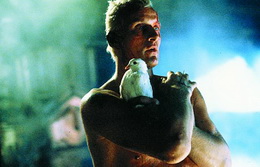
During the time it took to write this list, there are two new versions of “Blade Runner” available on DVD and Blu-ray. This Ridley Scott masterwork, based on the Philip K. Dick novel “Do Androids Dream of Electric Sheep?” is a must on any list of great films about “smart machines.” It doesn’t get much more intellectual than “Blade Runner” when it comes to literary science fiction on the big screen, which is why so few films have attempted or succeeded in chasing its tail.
2. The Original Star Wars Trilogy (1977-1983) 
Let’s pretend for a moment that the prequels were all just a bad dream from which we are all about to wake. In this fantasy there’s no Jar-Jar Binks, no Trade Federation representatives with offensive accents, and no greenscreen acting from capable veterans and disappointing neophytes alike. Let’s think back to the good old days before George Lucas decided to direct the prequels himself and picture the original trilogy as it was in 1983, finished and perfect. There are a pair of droids that are excuse enough to land at the top of this list, but the circuit board standout in the Star Wars universe is obviously Luke’s pops. The Darth Vader character is, of course, one of the all-time greats in the dilemma of man and machine. Like Robocop, Anakin Skywalker is “more machine than man,” but somewhere amidst all the circuitry and wiring some vestige of humanity still lurks. Lucas was right to realize the Vader character’s transformation from man to machine, and back again, was strong enough to build six movies on, he just wasn’t able to recognize that Irvin Kershner (who directed “The Empire Strikes Back”) should have directed all of them.
1. The Terminator (1984) 
Like “The Matrix,” this film, if taken all by it’s lonesome, is a monument of modern science-fiction storytelling. Humanity itself is faced with extinction, in the not so distant future at the hands of Skynet, a computer network that we created which has decided we’ve outgrown our usefulness. The inherent danger in creating artificially intelligent beings is that they might figure out eventually that the world just might be a more efficient place if there weren’t so many humans messing up the works. One of the problems with exceptional sci-fi is that audiences want more and studios are willing to give it too them, whether it dilutes the power of the original ideas or not. Half the films on this list prove that if humans could just leave well enough alone, we might all have fewer DVDs, but we’d also have a few more untarnished legacies to quibble about and defend at conventions.
Tags: Alien, Artificial Intelligence: AI, blade runner, Blue Harvest, Return of the Jedi, Robocop, Star Trek: First Contact, Star Trek: Generations, star wars, Terminator, The Empire Strikes Back, The Matrix, Transformers, Wall-E
You’ve had a week to mull over Eric’s “Director’s Cut” picks for “Top 10 Movies that Prove the Future Will Suck” so, now its my turn to dust off my previous list and make a few adjustments. Since Eric excluded the marvelous “Children of Men” from his updated list, I have also omitted it from mine, even though it certainly belongs in the mix. I also made a few necessary course corrections, including removing “Alien” from my original list and replacing it with “Serenity,” Joss Whedon’s superb feature film continuation of the television series “Firefly.” So get in touch with your big brother paranoia and strap on your pressure suits boys and girls and lets all have a stroll through the dismal future that just may come to pass.
10. Reign of Fire (2002) 
Yeah that’s right, I went there. Few films justify a six-pack of cheap beer and an obscene surround sound system quite like “Reign of Fire.” I, for one, just plain love dragons, can’t help it. Now- it’s not likely dragons will soon be rediscovered after having camped out, dormant for centuries, in an English mine shaft, salivating gasoline and waiting for their chance to break free– but if they did, that future would be less than rosy. Catastrophic disaster pics are usually suspect for one reason or another, and “Reign of Fire” is no exception. I will defend it exclusively on the explosive auditory work and the aforementioned dragons.
Denton Van Zan ‘Dragon Slayer’: You see they have great vision during the day, and even better vision at night. But in the failing light, they can’t focus. Magic hour.
9. Star Trek IV: The Voyage Home (1986) 
There are many arguments to be made that this film is tragically flawed, but I love it anyway. The plot device is true science fiction and actually pretty sweet. “The Voyage Home” finds our intergallactic heroes Kirk and company in modern day San Francisco - thanks in large part to the fact that “Home’s” original script was developed to co-star Trek-fan Eddie Murphy, who eventually backed out to do “The Golden Child.” On par with gritty futuristic concepts like that of “Children of Men,” “Home’s” premise is that humans have been such terrifically bad stewards of the planet Earth that we’ve managed to kill off a single species (humpback whales) who turn out to be crucial to our eventual survival. Of course, a killer premise isn’t everything and is entirely dependent of the execution, which, in this case, is lacking. Despite the heavy cheese factor, however, this remains one of my favorite of the original cast “Star Trek” pics and I stand by my claim that the story is rather clever if you can muster up a forgiving mood.
Spock: They like you very much, but they are not the hell “your” whales.
Dr. Gillian Taylor: I suppose they told you that.
Spock: The hell they did.
8. Serenity (2005) 
One of my favorite things about Joss Whedon’s conception of the future in his brilliant, but short-lived western-series-in-space “Firefly” and subsequent feature film continuation “Serenity,” is that there are no aliens. Whedon has dreamed up a fate for humans in which we successfully colonize space, but haven’t made contact with any alien life. In this version of the future, the humans prove that in the space travel years, it looks like we’re going to need several languages and a whole bunch of planets to make a proper mess of things in the ‘verse.
Capt. Malcolm Reynolds: You all wanna be looking very intently at your own belly buttons. I see a head start to rise, violence is going to ensue. Probably guessed we mean to be thieving here but what we’re after is not yours. So, let’s have no undue fussing.
7. Blade Runner (1982) 
Has anyone got an accurate count on how many versions of this thing Warner Brothers has released since the advent of the DVD? Ridley Scott’s classic futuristic thriller doesn’t get less good with time, just harder to sit through. For starters, you have to decide which version best represents Scott’s definitive vision. “Blade Runner” remains easily one of Harrison Ford’s most interesting roles and a genuine science-fiction noir with indelible imagery that continues to set a standard for the sci-fi genre. A future with replicants sounds scary, sure, but better that than a future filled with nothing but Sean Young films.
Deckard: They don’t advertise for killers in the newspaper. That was my profession. Ex-cop. Ex-blade runner. Ex-killer.
6. The Matrix (1999) 
Before the Wachowskis went and screwed this whole thing up with two unnecessary and extraordinarily disappointing sequels, “The Matrix” was absolutely revolutionary in its contribution to modern filmmaking. And like “Highlander” and “The Terminator,” it represented truly original storytelling in the sci-fi realm. Taken on its own in some revisionist reduction to a single film, “The Matrix” continues to stand up as one of the better movies of the genre.
Morpheus: Throughout human history, we have been dependent on machines to survive. Fate, it seems, is not without a sense of irony.
5. 12 Monkeys (1995) 
Big Brother is watching and Terry Gilliam knows it. This film gets overlooked when people think of top-notch science-fiction films, which is a shame. Gilliam has a remarkably interesting and singular aesthetic that works beautifully in this complex and non-linear thriller about one man’s struggle to subvert a past, present, and future bio-chemical holocaust. The creepy interrogation scenes and the shots of Willis navigating snow-covered and barren cities are incredibly memorable, as are the performances of both lead actor Bruce Willis and Brad Pitt, who received a Best Supporting Actor Oscar nomination for his role as Jeffery Goines.
Jeffrey Goines: You know what crazy is? Crazy is majority rules. Take germs, for example.
James Cole: Germs?
Jeffrey Goines: Uh-huh. In the eighteenth century, no such thing, nada, nothing. No one ever imagined such a thing. No sane person, anyway. Ah! Ah! Along comes this doctor, uh, uh, uh, Semmelweis, Semmelweis.
4. AI: Artificial Intelligence (2002) 
If director Steven Spielberg had cast anyone other than Robin Williams for voice-work and then left the kid and the audience at the bottom of the ocean, I would have said this blend of Kubrick and Speilberg was one of the finest pieces of sci-fi ever. In spite those hobbling choices, though, there is still plenty to like about “A.I.,” and it most definitely presents an ill picture of the future and a less than triumphant end to humanity. The philosophical aspects of the story are it’s strongest elements and, years later, remain absolutely haunting.
David: What’s for dinner tonight?
Monica: You know you don’t eat.
David: Yes. But I like sitting at the table.
3. The Abyss (1989) 
While Jim Cameron’s “The Abyss” wasn’t set in the future, the films big plot twist - and the majority of what was cut out of the theatrical ending - was that aliens had been observing us and decided it would be favorable to destroy us before we destroyed the planet. Next to “Close Encounters of the Third Kind” I think “The Abyss” represents one of the great notions about a first contact with extraterrestrials. For an even more dramatic take on alien intervention in human affairs, pick up a copy of Arthur C. Clarke’s “Childhood’s End.” Between these two science fiction masterworks, you’ll be up nights wondering who out there is watching and more than likely thinking we aren’t doing such a swell job minding the store.
Alan “Hippy” Carnes: What is all this stuff?
Ensign Monk: Fluid breathing system, we just got it. You use it when you go really deep.
Alan “Hippy” Carnes: How deep?
Ensign Monk: Deep.
Alan “Hippy” Carnes: HOW deep?
Ensign Monk: It’s classified.
2. Gattaca (1997) 
While it borrows aspects of its premise rather blatantly from Aldous Huxley’s “Brave New World,” “Gattaca” is a high watermark for the genre and one of my favorite futuristic flicks. New Zealand director Andrew Niccol (”Lord of War”) still has yet to outdo this film, his directorial debut, in which he makes masterful use of washes of color to create a highly stylized view of a genetically altered future. Stellar performances from Ethan Hawke and a then-unknown Jude Law give “Gattaca” exceptional depth and substance. As genetic engineering becomes a reality in the 21st Century, it is possible that the stratification of humans described in “Gattaca” will prove to be eerily prophetic.
Vincent: I was never more certain of how far away I was from my goal than when I was standing right beside it.
1. Minority Report (2002) 
Stephen Spielberg’s vision of the not-so distant future is just what the doctor ordered to make you feel nice and queasy about where were heading. Thanks to a trio of pre-cognitive beings, law enforcement is able to launch a program that convicts and sentences people for crimes that haven’t yet been committed - now if that’s not a hot-shit foundation for a sci-fi classic, I don’t know what is. Not so surprisingly, “Minority Report” is based on a short story by the legendary novelist Phillip K. Dick (”Do Androids Dream of Electric Sheep?,” which became “Blade Runner”), and once again Spielberg does a bang-up job creating extraordinary movie magic in the form of a fascinating and believable future world.
John Anderton: Mr. Marks, by mandate of the District of Columbia Precrime Division, I’m placing you under arrest for the future murder of Sarah Marks and Donald Dubin that was to take place today, April 22 at 0800 hours and four minutes.

laurence fishburne is married to this actress from another popular sci-fi franchise, “firefly/serenity.”
Tags: 12 Monkeys, AI: Artificial Intelligence, blade runner, Firefly, Gattaca, Joss Whedon, Minority Report, Reign of Fire, Serenity, Star Trek, Star Trek IV, The Abyss, The Matrix, The Voyage Home
Alfonso Cuaron’s masterful “Children of Men,” the best film of 2006, takes place in a not-too-distant future where women are unable to give birth and the planet is dying out. It’s a metaphor for the way things are going today. Everybody is so excited to look into the future, but if art is truly a reflection of our culture, then these movies prove that we should be lucky we’re not going to be around to see the next century. The world is going to pot, so to speak, and these films are way ahead of the game. Excepting “Children of Men,” here are some other interesting movies that prove the future will suck. Celebrate your mortality because it’s all downhill from here, kids. On J.D.’s turn to spruce up his list, he made a few changes, but have no fear, the dragons are still making the cut. Read J.D.’s “Top 10 Movies that Prove the Future Will Suck” here.
10 ½. Runaway (1984)
The tagline for this campy sci-fi thriller, which takes itself far too seriously to realize how funny it really is: “It Is The Future. He fought the horror of robots programmed to kill.” Tom Selleck is a cop who must contend with housekeeping robots who look like dishwashers and accidentally kill the families they are supposed to be assisting. KISS bassist/reality TV star Gene Simmons is a nasty man named Luther (Lucifer=Devil=Satan) who makes smart-missle bullets that can follow people around corners and mechanical spiders that hop around and squirt poisonous venom. It all adds up to loads of ridiculous fun, and a really sucky future where novelist Michael Crichton is allowed to continue directing movies.
Luther: That wasn’t very nice, Ramsay!
10. Westworld (1973)
More Crichton silliness. In this imaginative-but-laughable dystopia, Yul Brynner’s Wild West outlaw robot takes a licking and keeps on ticking. He is stuck in a fun-filled theme park where robots mingle with humans and, for recreation, the humans can do whatever they please. Every day Brynner’s robot is shot to shit by wealthy assholes who want to live out their John Wayne fantasies. When Brynner’s robot brain finally decides he’s Dee Snider and he’s not going to take it anymore, he fights back! It’s kind of like the evil KISS robots at the theme park in “KISS Meets the Phantom of the Park,” but without all the KISS.
Interviewer of Delos Guests: [voiceover] Why don’t you make arrangements to take our hovercraft to Medieval World, Roman World and Westworld. Contact us today, or see your travel agent. Boy, have we got a vacation for you.
9. The Terminator (1984)
Although this future is glimpsed only briefly in James Cameron’s original sci-fi suspense thriller, it consists of a brutal war between man and machine, and the machines are kicking our asses. Those soulless hunks of metal think they are so smart that they’ve sent one back in time to kill our leader’s mom and stop him from ever being born. Their evil machine stayed, of course—and continued to kill lots of bad guys and utter punny catch phrases post-kill, eventually becoming the governor of California. Now, if we could only go back in time to find his mother.
The Terminator: I’m a friend of Sarah Connor. I was told she was here. Could I see her please?
Desk Sergeant: No, you can’t see her she’s making a statement.
The Terminator: Where is she?
Desk Sergeant: It may take a while. Want to wait? There’s a bench over there
The Terminator: [looks around then looks back at him] I’ll be back!
8. Alphaville (1965)
Jean Luc-Godard directs an unusual black-and-white sci-fi noir with very little costumes, special effects, or set design. Its chilling effect comes from a grating soundtrack, stark cinematography, and the mechanical manner of its characters. “Alphaville” is a confusing and truly disturbing movie that opines that, in the future, we may have a lot less of the traits that we closely identify with human beings.
Natacha Von Braun: You’re looking at me very strangely.
Lemmy Caution: Yes.
Natacha Von Braun: You’re waiting for me to say something to you.
Lemmy Caution: Yes.
Natacha Von Braun: I don’t know what to say. They’re words I don’t know. I wasn’t taught them. Help me.
Lemmy Caution: Impossible. Help yourself; then you will be saved. If you don’t, you’re as lost as the dead of Alphaville.
Natacha Von Braun: I… love… you. I love you.
7. The Postman (1997)
Sometimes it is hard to see how certain pictures ever get greenlit. Here is a truly terrifying post-apocalyptic version of the future from Oscar-winning director Kevin Costner (he who dances with wolves!) where delivering mail is the noblest profession of all and Tom Petty pops up dressed like he was in his “You Got Lucky” video, minus the cool song, or his 4X4 with sidecar. This lame-ass “Road Warrior”-ripoff-looking future really sucks ass.
Postman: I know you. You’re… famous.
Tom Petty: I was once… sorta.
General Bethlehem: You see the reason you don’t want to die for anything is because you have nothing to die for. That’s the difference between you and me. You don’t believe in anything.
The Postman: I believe in the United States.
6. Ghost in the Shell (1995)
Rather than simply creating robots to do the things we don’t want to do, the humans in this strikingly original anime classic from Mamoru Oshii simply use robot parts to fix their own bodies. Consequently, “life” takes on a different meaning, since very little human parts are left on anybody. The future truly sucks in this movie, but it looks cool as hell. It’s refreshing to see old school drawn animation (rather than the computer animation that’s so prevalent these days that its now the status quo) with visual inventiveness to spare.
Batô: Chief, you ever question the ethics of the neurosurgeons who monkey around inside your brain?
Section 9 Department Chief Aramaki: They undergo psychiatric evaluations, especially those in security. They’re subjected to a stringent screening of their personal lives. Of course, the ones who check are only human.
Batô: I guess once you start doubting, there’s no end to it.
5. A.I.:Artificial Intelligence (2001)
Humans are selfish assholes who blow up robots for fun at state fairs, and Haley Joel Osment is an android who just wants to be loved—is that so wrong? The film’s first fake-out ending is bleak, as the poor little android is left at the bottom of the ocean forever. Many people complained about the ending that directly followed because it seemed to give us the warm, fuzzy feeling of a typical Spielberg movie (and it seemed tacked on). If you really think about it, though, (SPOILER ALERT) having the kid see a fake version of his mother for only a day before he lives forever without ever seeing her again is a far bleaker ending that’s more depressing and twisted—in a sick, virtual reality way.
David: Mommy? Will you die?
Monica: Well, one day, David, yes, I will.
David: I’ll be alone.
Monica: Don’t worry yourself so.
David: How long will you live?
Monica: For ages. For 50 years.
David: I love you, Mommy. I hope you never die. Never.
4. Soylent Green (1973)
The future sucks all the way through this B-movie camp classic, which features people eating green slop like horses from a trough, and no less than Edward G. Robinson (”Little Caesar,” “Double Indemnity”) slumming it, big time. But it all really comes down to Charlton Heston at the end, screaming at the top of his lungs. If you haven’t seen it, I don’t want to reveal it, but then again, I don’t know if I can recommend sitting through the entire film to hear just one pristine, ever-quotable Shatner-worthy moment from Mr. Heston.
Richard: …is brought to you by Soylent red and Soylent yellow, high energy vegetable concentrates, and new, delicious, Soylent green. The miracle food of high-energy plankton gathered from the oceans of the world.
3. A Clockwork Orange (1971)
Stanley Kubrick adapts Anthony Burgess’ novel, creating a whole slew of dumbasses who misconstrue the film’s meaning by glorifying its brusque style of violence. When I saw Motley Crue include the movie’s rape scene in a montage of “cool violence” at a concert on their Generation Swine tour, I knew things were only getting worse. When I witnessed the audience cheering and whooping to the images, I realized they already have.
Alex: There was me, that is Alex, and my three droogs, that is Pete, Georgie, and Dim, and we sat in the Korova Milkbar trying to make up our rassoodocks what to do with the evening. The Korova milkbar sold milk-plus, milk plus vellocet or synthemesc or drencrom, which is what we were drinking. This would sharpen you up and make you ready for a bit of the old ultra-violence.
2. Blade Runner (1982)
Ridley Scott was way ahead of the curve on this one, creating a production design that has yet to be topped in its absolute uniqueness. Using real-life futurist scholars as guides, he gave Philip K. Dick’s philosophical novel “Do Androids Dream of Electric Sheep?” the full treatment, creating backstories upon backstories for a world that changed the way we look at science fiction films. Humans have created replicants, and must retire them when they go bad, or “outlive their usefulness.” Advertisements are annoyingly blared from a neon cityscape that mirrors modern-day Tokyo, minus the flying machines. And poor Harrison Ford has poopy pants, wearing a perma-frown through the entire film.
Batty: I’ve seen things you people wouldn’t believe. Attack ships on fire off the shoulder of Orion. I watched C-beams glitter in the dark near the Tannhauser gate. All those moments will be lost in time, like tears in rain. Time to die.
1. Brazil (1985)
Forget Terry Gilliam’s “12 Monkeys.” This is the real Gilliam deal. “Brazil” is an absolute classic, a darkly comic dystopian nightmare where a boring office drone lives a rich fantasy life flying through the air and fighting giant samurai warriors. Terrorist bombings abound (sound familiar?), and renegade air conditioner repairmen stalk the streets, helping the common man cut through inefficient bureaucracy. A family is issued a refund check when the government accidentally executes its father due to a typo error. On top of all that, true love does not conquer all.
Sam Lowry: Give my best to Alison and the twins.
Jack Lint: Triplets.
Sam Lowry: Triplets? My how time flies!
Tags: a.i., alphaville, artificial intelligence, blade runner, brazil, children of men, clockwork orange, costner, cuaron, future, ghost in the shell, kubrick, postman, soylent green, speilberg, westworld